Clinical trials aren’t experimental guinea-pig situations. They are carefully designed studies that move medicine forward. For Black women—especially those facing breast cancer—clinical trials can be a powerful tool, not a last resort.
Here’s why they deserve serious consideration.
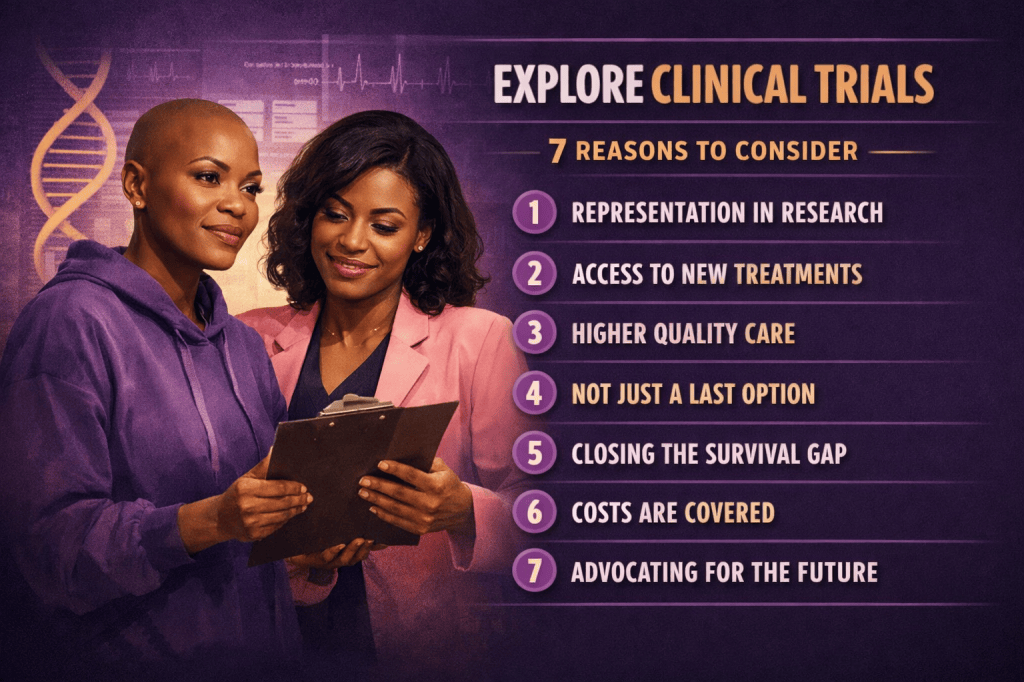
1. Our Bodies Are Underrepresented in Research
Most cancer treatments are built on data that does not fully include Black women. What matters is genetics, tumor biology, and how our bodies process medication can differ. When we participate, we help ensure future treatments actually work for us—not just for someone else.
2. Access to New Treatments Before They’re Widely Available
Clinical trials often provide access to cutting-edge therapies years before they become standard care. That can mean newer drugs, targeted treatments, or improved combinations that may be more effective or have fewer side effects.
3. Higher Quality Monitoring and Care
Trial participants are closely monitored. More check-ins. More testing. More eyes on your health. That level of attention can catch issues earlier and provide reassurance during an already stressful journey.
4. Clinical Trials Are Not a “Last Option.”
This is one of the biggest myths. Many trials are designed for people who are newly diagnosed, in early stages, or even in survivorship. Exploring trials early can expand your options, not limit them.
5. You Help Close the Survival Gap
Black women are more likely to die from breast cancer, even when diagnosed at the same stage as white women. That gap won’t close without data that includes us. Participation helps researchers understand why disparities exist and how to fix them.
6. Costs Are Often Covered
Many clinical trials cover the cost of the study drug, extra testing, and sometimes transportation or lodging. This can reduce financial strain while still allowing you to receive high-quality care.
7. You Advocate for the Next Generation
Every Black woman who participates makes it easier for the next one. Your involvement helps shape better guidelines, better treatments, and better outcomes for daughters, nieces, sisters, and friends.
The Bottom Line
Clinical trials are about choice, not pressure. You can ask questions. You can say no. You can leave at any time. But ruling them out without exploring them means missing an opportunity that could benefit you—and countless others.
Knowledge is power. Participation is impact. And Black women deserve both.

 Melanin & Pink Ribbons
Leave a comment